
Ready-to-Present Resource
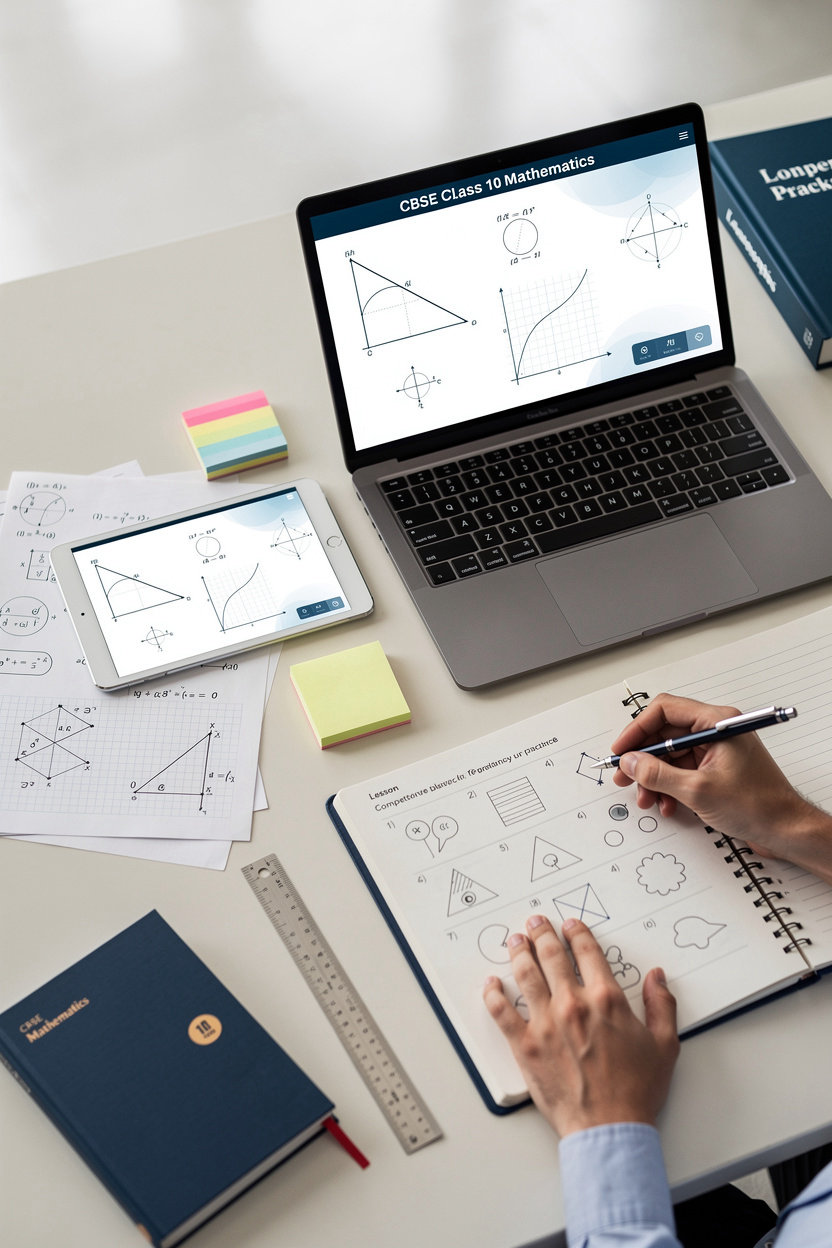
Havi-Powered Teaching Decks for CBSE Class 10 Math
Stop spending hours designing slides. Access curriculum-aligned, competency-focused presentation decks powered by Havi—structured for concept clarity and ready to present in your classroom today.
Curriculum-Aligned Structure
Every slide maps directly to CBSE Class 10 Mathematics curriculum, so you spend less time adapting and more time teaching.
Competency-Based Questions Built In
Slides emphasize the question types CBSE increasingly uses, so students practice exactly what they'll face on the board exam.
Supports Differentiated Instruction
Visual hierarchy and multiple entry points let you adapt the same deck for varied learner levels—without extra prep.
Havi is an AI-powered presentation design tool that structures your lesson notes into polished, visually coherent slides in minutes. No design skills needed. Every deck is yours to customize, export, or share with your class.
Opens in a new tab. No login required.
Revision Notes & Study Materials
Trusted, CBSE-aligned resources you can recommend to students or use for your own lesson preparation. Each source is curated for clarity, exam relevance, and classroom application.
-
Vedantu CBSE Class 10 Maths Revision Notes
Comprehensive chapter-wise notes with key formulas, solved examples, and exam-focused summaries for quick review and student independent study.
-
Careers360 Best Reference Books for CBSE Class 10 Mathematics
Curated list of top reference books with descriptions of coverage and suitability—helps you and students select the right supplementary materials for deeper practice.
-
CBSE Official Mathematics Grade-10 Manual
Official CBSE support material with curriculum guidance, chapter structure, and official question examples—the authoritative reference for exam-prep strategy and marking alignment.
CBSE Official Materials
Access the authoritative resources from CBSE directly. These materials form the backbone of curriculum alignment, exam strategy, and student practice. Use them alongside your lesson planning to ensure every competency-based question and marking criterion is covered.
CBSE Mathematics Grade-10 Manual
The official CBSE curriculum manual provides chapter-by-chapter guidance, learning outcomes, and sample questions. Use it for lesson structure verification and to identify which competencies each topic addresses. Download the manual.
Previous Years' Question Papers
CBSE board exam papers from prior years show question patterns, difficulty distribution, and the types of problems students encounter. Review these to identify recurring competency-based questions and design targeted practice sessions that mirror exam conditions.
Marking Schemes
Official marking schemes reveal how examiners award points, what counts as full credit, and where partial marks apply. Teach students to analyze these schemes so they understand grading logic and learn to structure responses that capture full marks on competency-based and application questions.
How to Use These Materials
Start with the manual to verify your curriculum alignment. Incorporate previous years' papers into weekly or bi-weekly practice sessions. Share marking schemes with students during revision so they can self-evaluate and refine their problem-solving approach. Together, these resources ensure your teaching stays true to CBSE expectations while helping students build exam confidence.
How to Use These Resources
The resources on this site work best when used as an integrated workflow—each piece builds on the last. Your goal is to move students from conceptual understanding through differentiated practice to confident exam performance. Here's how to sequence them in your classroom.
Start with the Havi presentation deck for your conceptual foundation. Use it to structure your lesson—whether you present it directly or adapt it for your classroom context. The deck is designed around CBSE curriculum, so it covers the concepts your students need. Because it's visual and structured, it reduces your prep time while keeping the focus on mathematical thinking, not formula recall. Customize the slides as needed; the deck is a starting point, not a script.
Next, direct students to the Vedantu revision notes for independent study and differentiated practice. After you've taught the concept in class, students can use these notes to review at their own pace. The notes are organized chapter-by-chapter and include key formulas and solved examples—exactly what students need for homework, self-study, or catching up on missed lessons. This is where differentiation happens: stronger students can work ahead; students who need more support have clear, structured notes to build from.
Incorporate the official CBSE Mathematics Grade-10 manual for competency-based question practice. Once students have grasped the concept and practiced it, use the official manual and previous years' question papers to expose them to the types of questions the CBSE actually asks. Competency-based questions require students to apply concepts to new situations—they reward understanding, not memorization. By practicing with authentic CBSE questions, students build the confidence and skill they need for the board exam.
Use the marking schemes to help students understand how examiners evaluate responses.
Finally, use the CBSE marking schemes to teach students how their work will be graded. Walk through a marking scheme together—show students what a full-marks response looks like, where partial credit is awarded, and what causes marks to be lost. When students understand the grading rubric, they learn to communicate their mathematical thinking more clearly. They also gain confidence: they're no longer guessing what the examiner wants; they know. This step transforms practice into genuine exam preparation.
Customize this workflow to your classroom and your students' needs. Some groups may need more time on conceptual foundation; others may be ready for competency-based practice sooner. The resources are flexible—use them in the order that serves your teaching and your students' learning.